King Tide Flooding Cleanup in Miami Beach, FL
Fall king tides push Biscayne Bay up through storm drains and into garages and ground floors, even on sunny days. The restoration team removes the water, treats it as contaminated and dries the structure.
(888) 621-2041Get the salt water out of your building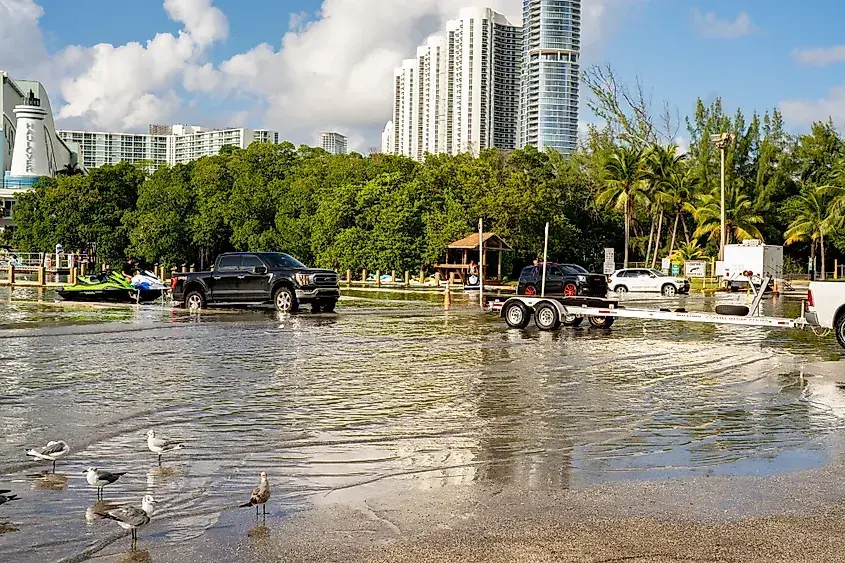
What to do the moment you find tidal water inside
- 1
Stay out of the water
Tidal water can hide debris and carry contaminants. Keep children and pets away from it.
- 2
Cut power at grade
Shut off breakers for ground-floor outlets and equipment if the panel area is dry.
- 3
Move cars and valuables up
Get vehicles and stored items above the water before the next high tide.
- 4
Photograph the high-water mark
Photos of the water level on walls and doors help the flood claim.
- 5
Call for cleanup
Get extraction and Category 3 cleanup started before the salt water soaks into the walls.
What does king tide flooding cleanup cost in Miami Beach, FL?
In Miami Beach, FL, king tide flooding cleanup typically runs $1,500 to $30,000 or more. The drivers are how much square footage took water, whether drywall and flooring must be cut out as Category 3, garage or lobby size, and how fast cleanup started.
Garage or storage room
- Extraction and debris removal
- Salt residue cleaning
- Antimicrobial on hard surfaces
Ground-floor unit
- Flood cut above the water mark
- Carpet and pad removal
- Structural drying
Lobby or several units
- Containment and HEPA scrubbers
- Common-area documentation
- Daily moisture logs
For a planning range on your own loss, try the Miami Beach water damage cost calculator. The restoration contractor who responds sets the real scope after the moisture map.
How tidal flood cleanup is handled in Miami Beach
- 1
Moisture mapping
The tech who does the walkthrough maps wet materials with pinless meters and a thermal camera before any equipment goes down, including the unit below and the wall cavities.
- 2
Extraction
The extraction crew pulls standing water with truck-mounted or portable units, so it leaves the building instead of spreading along the slab.
- 3
Air movers and LGR dehumidifiers
The drying team sets air movers to each room's evaporation load and runs LGR dehumidifiers, adding desiccants for dense Class 4 materials like concrete and terrazzo.
- 4
Daily readings to the drying goal
Readings are logged every day, and equipment comes out when wet materials sit within 2 to 4 points of a dry reference in the same building.
King tides are the highest seasonal tides of the year, and on a barrier island that sits only a few feet above sea level they show up as salt water in the street. The water comes up through storm drains and the porous limestone under the island, so it can reach a garage or a ground-floor unit without a drop of rain.
Where tidal water gets in
The low bayside blocks feel it first: West Avenue, Alton Road, Sunset Harbour, parts of Normandy Isles and Biscayne Point. The city has raised streets and added pump stations in several of those areas, which helps, but garages, lobbies, storage rooms and ground-floor units can still take water when a king tide lines up with a heavy afternoon downpour.
- Parking garages and ramps below street level
- Lobby doors, mail rooms and storage rooms at grade
- Ground-floor units and townhomes on the bay side
- Elevator pits and mechanical rooms
Why tidal water is treated as Category 3
Water that rose through storm drains and crossed the street carries salt, fuel residue, bacteria and debris. IICRC S500 treats it as Category 3, so the mitigation team removes porous materials it touched, like carpet, pad and the bottom of the drywall, rather than drying them in place. Hard surfaces are cleaned and treated with an EPA-registered antimicrobial before drying begins.
Salt water leaves salt behind. After extraction, crews rinse and clean hard surfaces so salt residue does not keep pulling moisture back into the concrete and the wall base.
Planning around the tide calendar
Predicted high tides are published by NOAA Tides and Currents, and the City of Miami Beach posts king tide advisories and flooding updates each season. Knowing the dates helps: move cars and stored items up, set flood barriers at garage entrances, and have a plan for the ground floor. The king tide flood risk check gives a quick read on how exposed your block and building are.
Tidal flooding is usually a flood-policy matter rather than a standard homeowners claim; FEMA flood insurance explains how flood coverage works. Related: storm surge flood cleanup, sewage backup cleanup and structural drying. For a planning number, use the water damage cost calculator.
Related water damage services in Miami Beach
Water damage restoration across Miami Beach and the nearby islands
The Miami Beach restoration crew covers South Beach, Mid-Beach and North Beach, plus Surfside, Bal Harbour, Bay Harbor Islands, North Bay Village and Fisher Island.
From South of Fifth to the Normandy Isles, the restoration team works 24/7 in every Miami Beach ZIP: 33139, 33140, 33141, 33109, 33119 and 33239, plus 33154 to the north.
High-rise access, loading docks and building management rules are part of the job on the island, and the crew plans for them before the equipment goes up.
See every neighborhood and ZIP coveredKing Tide Flooding Cleanup questions in Miami Beach, FL
When are king tides in Miami Beach?
The highest tides usually arrive in the fall, roughly September through November, around the new and full moons. Predicted dates are published by NOAA and the city posts advisories each season.
Is king tide water really contaminated?
Yes. It comes up through storm drains and runs across streets, so it carries salt, oil residue, bacteria and debris. It is handled as Category 3 water.
Can my carpet be saved after tidal flooding?
Carpet and pad touched by Category 3 water are removed, not dried. Hard flooring like tile or terrazzo can usually be cleaned, treated and dried.
Does homeowners insurance cover king tide flooding?
Rising water from outside is usually treated as flood, which a standard homeowners or condo policy often excludes. Flood coverage is a separate policy. Coverage depends on your policy, so check with your own insurer.
How high does drywall get cut after tidal flooding?
Crews usually cut a set height above the highest water mark, often 12 to 24 inches, so the wall cavity can dry and contaminated insulation can come out.
What can I do before a king tide?
Move cars and stored items off low garage levels, set barriers at garage and lobby doors, raise items in ground-floor storage and check that backflow valves on drains are working.
King Tide Flooding Cleanup in Miami Beach? Call now.
Every hour water sits, it moves deeper into drywall, cabinets, baseboards and the slab. The Miami Beach restoration crew extracts, dries to the S500 goal and documents the loss for your claim.
(888) 621-2041Speak with Miami Beach 24/7 dispatch